Your Cart is Empty


Jewellery in Art: The Hidden Language of Adornment
Jewellery has always held a special place in art. Long before it was displayed in glass cases or sold through boutiques, it appeared on canvases, carved in marble, and illuminated in manuscripts. Artists have used jewellery not simply as decoration, but as a powerful storytelling device, signaling wealth, love, devotion, status, and sometimes even secrecy. When we look closely at jewellery in great works of art, we’re often glimpsing much more than ornament; we’re seeing clues about culture, identity, and the human desire to adorn ourselves.
One of the most famous examples appears in the work of the Dutch master Johannes Vermeer and his iconic painting Girl with a Pearl Earring (c.1665).
 (Photo: Public domain)
The luminous pearl in this painting is far more than a simple accessory. In the 17th century, pearls symbolised purity, wealth, and refined taste. Vermeer paints the earring with extraordinary restraint, just a few strokes of light and shadow, yet it becomes the visual anchor of the entire composition. The pearl catches the light and draws the viewer’s eye immediately, reinforcing how jewellery can become the emotional centre of an image.
In another celebrated example, jewellery becomes a symbol of marriage and social status in The Arnolfini Portrait by Jan van Eyck.

(Photo: NGV – London)
Painted in 1434, the work is filled with symbolism. The woman wears a delicate necklace and finely detailed rings, objects that signal both wealth and the sacred nature of the union depicted. Rings in particular have long appeared in art as symbols of commitment and eternity. Van Eyck renders the jewellery with meticulous precision, demonstrating both the skill of the artist and the importance placed on precious objects during the Northern Renaissance.
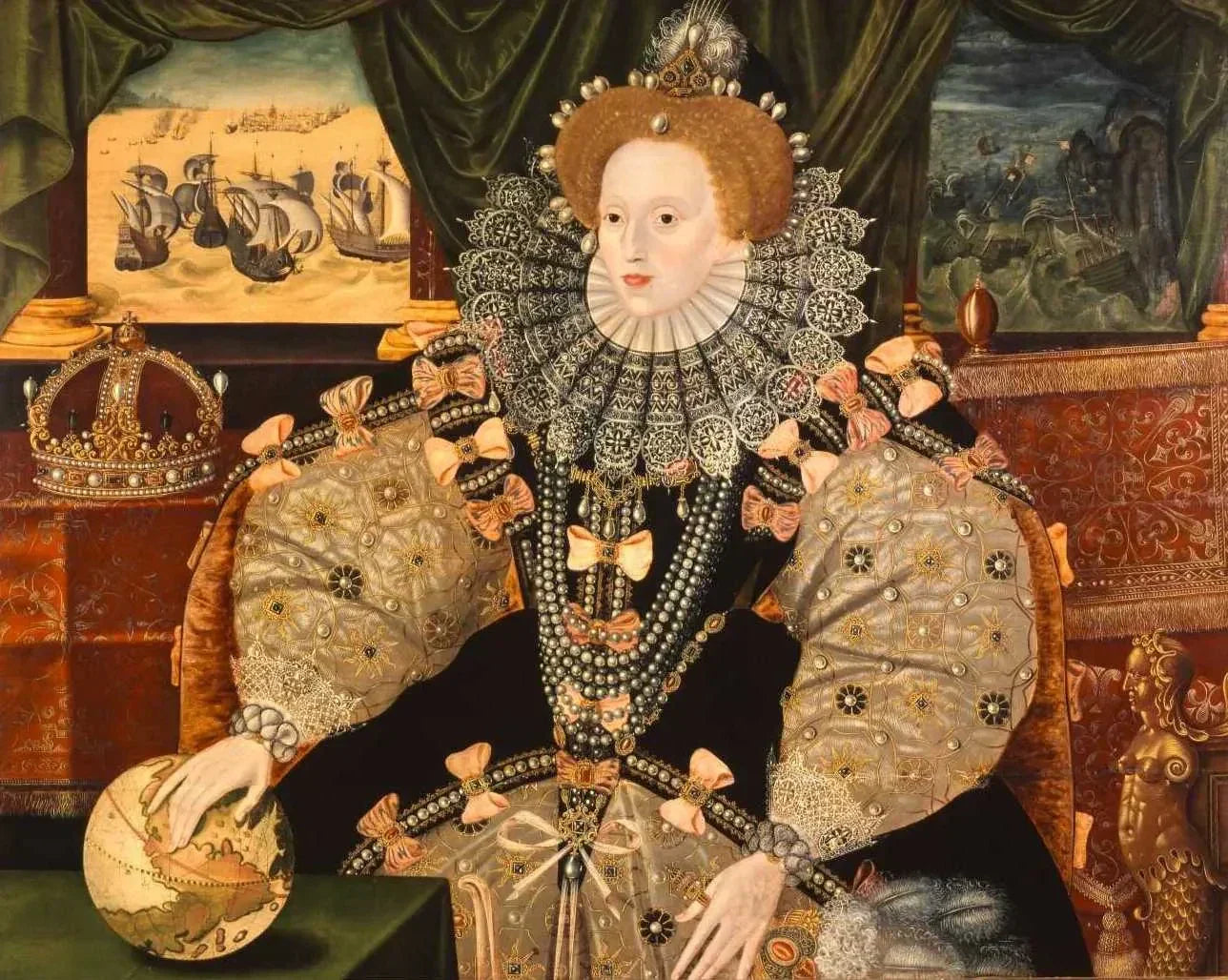
Jewellery also appears frequently in portraiture as a sign of power and authority. In the Tudor court of England, elaborate jewels communicated rank as clearly as titles or clothing. One striking example can be seen in the portraits of Elizabeth I.
 (Photo: Royal Museum – London)
In works such as the Armada Portrait of Elizabeth I, the queen is draped in cascades of pearls, gemstone brooches, and intricate goldwork. Pearls were associated with chastity and divine authority, making them a perfect symbol for the “Virgin Queen.” These portraits are almost a catalogue of Renaissance jewellery design - layered necklaces, pendant crosses, jewelled bodices, and ornamental hairpieces-all carefully painted to reinforce the queen’s image as powerful, untouchable, and divinely appointed.
Moving forward in time, jewellery takes on a different role in the work of the Austrian symbolist painter Gustav Klimt.
In paintings such as The Kiss and Portrait of Adele Bloch-Bauer I, Klimt integrates jewellery directly into the decorative surface of the painting. Gold leaf, intricate patterns, and stylised gemstones blur the line between fine art and ornament. The jewellery here becomes almost architectural-part of the overall design rather than a separate object. Klimt was heavily influenced by Byzantine mosaics and the decorative arts, and his paintings celebrate jewellery not just as adornment but as a form of visual poetry.
 The Kiss (Photo: Public domain)
Across centuries and cultures, jewellery has served artists as both symbol and spectacle. A simple ring can represent love or loyalty. A strand of pearls might signal purity or prestige. A jewelled crown can convey divine power. Through careful depiction of these objects, artists record not only fashion and craftsmanship, but also the values and aspirations of their time.
For those who love antique and vintage jewellery today, these paintings offer something especially fascinating. They provide a window into how jewellery was worn, layered, and valued in earlier centuries. The rings, necklaces, and brooches captured on canvas often mirror real pieces still surviving in collections and estates.
In this way, art becomes a kind of historical jewellery box-preserving designs, styles, and meanings that continue to inspire collectors, designers, and jewellery lovers today.
 Portrait of Adele Klimt (photo: Public domain)
Jewellery in Modern Art
In contemporary art, jewellery often functions differently than it did in historical portraiture. It may still signal beauty or wealth, but it is just as likely to represent cultural heritage, personal identity, political expression, or commentary on consumer culture.
From Kahlo’s deeply symbolic necklaces to Warhol’s pop-culture glamour and Wiley’s powerful contemporary portraiture, jewellery continues to appear in art not simply as decoration, but as a visual language.
For jewellery lovers, these works remind us of something important: jewellery has always carried stories. Whether painted by a Dutch master, worn by a Mexican modernist, or depicted by a contemporary portrait painter, each piece reflects the values, identity, and aspirations of its time.
The work of Frida Kahlo sits at the bridge between modern and contemporary art. In many of her self-portraits, including Self Portrait with Thorn Necklace and Hummingbird, jewellery becomes a central part of her visual identity.
Kahlo often wore layered pre-Columbian bead necklaces, heavy earrings, and traditional Mexican jewellery. These were not just decorative choices. They were deliberate expressions of cultural pride and political identity. In her paintings, jewellery becomes symbolic: it speaks about heritage, resilience, femininity, and even suffering. The famous thorn necklace in one portrait functions almost like a crown of thorns, referencing pain while also conveying strength.

Self Portrait With Thorn Necklace & Hummingbird (Photo: Harry Ransom Centre)
In several works exploring intimacy and relationships, Pablo Picasso includes rings as subtle markers of connection. In paintings such as The Lovers, hands are often intertwined, with rings appearing as quiet signals of partnership.
Picasso was fascinated by the language of gesture - hands touching, holding, reaching. Rings in these compositions reinforce themes of intimacy and union. Even when simplified in his modernist style, the presence of a ring still communicates the age-old symbolism of commitment

Ring designed by Pablo Picasso to appease angry lover (Photo: Sotheby’s)
Contemporary painter Kehinde Wiley is known for reimagining classical portraiture with modern subjects. His paintings often depict his subjects wearing contemporary clothing and jewellery, posed in the grand style of Renaissance or Baroque royalty.
By combining historical painting traditions with modern jewellery and street fashion, Wiley reframes who gets to appear powerful and monumental in art. Jewellery here becomes a symbol of confidence, identity, and self-definition.

Beyonce Portrait (Photo: Open Art)
In the staged photographs of Cindy Sherman, jewellery, including rings, helps construct fictional characters.
In her famous Untitled Film Stills series, Sherman transforms herself into dozens of imagined women from mid-century cinema. A ring might suggest a married housewife, a socialite, or a glamorous starlet. Jewellery becomes shorthand for identity, revealing how a small detail can communicate an entire narrative.

(Photo: ARTSEY)
Jewellery has always been more than decoration. In art, it becomes a quiet storyteller - revealing status, identity, love, power, rebellion, and memory. From the symbolic rings in Renaissance portraits to the bold, expressive adornment seen in modern works, artists have long understood that a single piece of jewellery can speak volumes without a word.
What makes jewellery in art so compelling is this layered meaning. A necklace might signal wealth, a wedding band devotion, a brooch remembrance, or a cluster of gemstones personal taste and individuality. Across centuries and cultures, artists have used these small but powerful details to deepen their portraits and bring their subjects to life.
Today, jewellery continues to play that role in contemporary art and photography. It remains a bridge between the personal and the visual, a way to express who we are, what we value, and the stories we carry with us.
Perhaps that is why jewellery has never lost its place on canvas. Long after fashions change, these small, luminous objects continue to capture the human desire to mark moments, celebrate beauty, and leave something meaningful behind. In art, as in life, jewellery reminds us that the smallest details often hold the richest stories.
 Lover’s Eye (Photo: Birmingham Museum of Art)